Watercolor or Colored Pencil for a Portable Art Kit?
Compare watercolor and colored pencil for a portable art kit, from setup and cleanup to control, so you can choose supplies that suit the session you want.
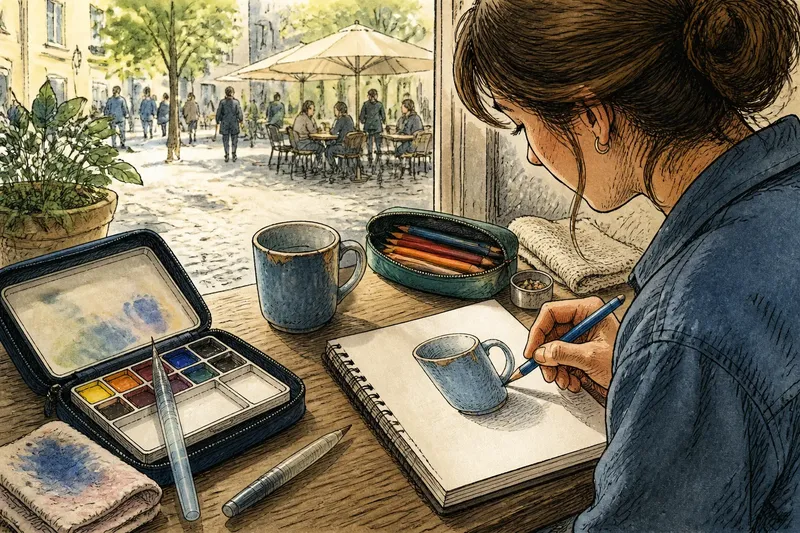
A café table is barely wider than your sketchbook, and the window light is changing while you decide what to unpack. A portable art kit can make that moment easy or fussy. For a small kit, the choice between watercolor and colored pencil is less about which medium is better and more about what you want your hands to do during a session.
What kind of session are you carrying?
Watercolor is built around fluid movement. A brush carries pigment across paper, water softens an edge, and one transparent layer can show through another. It suits sessions where you want to block in broad shapes, suggest light, or let a wash spread with a little unpredictability.
Colored pencil keeps the action close to the surface. You place marks directly, build color with strokes, and can revise a shape as you go. It suits close observation and deliberate detail, or a short drawing that needs no drying time.
Think about the pace you enjoy. Watercolor invites pauses while a wash settles or dries; pencil lets you keep working over the same area. Neither demands a polished result. The useful question is whether you want to steer a moving wash or accumulate marks one at a time.
What actually goes in the kit?
A compact watercolor setup can be simple: a small palette or a few pans, a water brush or one travel brush, watercolor paper, and a way to hold a little clean water. A water brush stores water in its handle, so it avoids a separate jar, though it still needs occasional wiping. A small cloth or tissue helps manage excess water and clean the brush.
Colored pencil asks for fewer supporting objects. A small selection of pencils, a sharpener with a shavings container, and paper are enough to begin. A soft cloth can keep pigment dust off the page and your hands. If you carry a craft knife instead of a sharpener, consider where you will use it and how you will store it safely; a compact sharpener is often simpler outside the home.
Paper matters in both kits, but in different ways. Watercolor paper is made to handle wet pigment, and its texture affects how washes travel. Colored pencil can work on many drawing papers, though tooth—the paper’s slight surface texture—gives pigment something to grip. Check the paper and supply makers’ instructions when compatibility or handling is unclear.
For a first outing, pack only the colors or pencils you expect to use. A smaller choice can make settling into a session easier.
Which medium gives you more control?
Pencil offers immediate, local control: a line stays where you put it, and you can change pressure to make a mark lighter or stronger. Layering lets you shift a color gradually, while hatching and crosshatching can describe texture without extra tools. The tradeoff is that broad, even areas may take patience, and heavy pressure can flatten the paper’s tooth and leave less room for later layers.
Watercolor control is more indirect. The wetness of the brush, the paper, and the wash all shape the result. A damp brush can soften a boundary; a drier one can leave a more broken mark. Because color may flow beyond the exact stroke, watercolor rewards attention to timing, but it also makes small surprises part of the process.
Imagine you have ten quiet minutes to draw a chipped blue mug on a café table. With colored pencil, you could trace its rim, add a few blue layers, and deepen the shadow under the handle. With watercolor, you could lay in a pale shape, leave a patch of paper for reflected light, and add a darker wash after the first one settles. The first session keeps the marks precise; the second makes the changing color and edges part of the pleasure.
How do setup and cleanup change the mood?
Pencil has a low-friction start: open the case, choose a point, and begin. Cleanup usually means putting pencils away and emptying shavings if needed. That makes it comfortable in places where water would be inconvenient, such as a crowded bench or a short stop between errands.
Watercolor takes a little more arranging. You need to keep water upright, avoid brushing a wet sleeve against the page, and give washes room to dry before closing the book. A water brush reduces loose gear, but it does not remove the need to wipe the tip or manage a damp painting.
That extra handling can be part of the appeal rather than a drawback. Mixing a color, rinsing the brush, and watching a wash settle can turn a brief pause into a slower, more tactile session. Choose the setup that feels like a welcome ritual, not a chore you will resent carrying.
Which one suits the place you draw?
Consider the surfaces and conditions you actually encounter. A pencil kit is forgiving on a lap or a narrow table, and its supplies are easy to put away quickly. A watercolor kit is more comfortable where you can set down a palette, keep water steady, and leave the page open for a while.
Wind, crowding, and movement can complicate either medium. Loose pencils can roll; a light sketchbook can lift; an open water container can spill. A zip case, a book with a firm cover, and a small cloth can help keep a session contained without turning the outing into an equipment project.
If your favorite places are unpredictable, try carrying one medium at a time rather than forcing a full studio into a bag. Let the setting help decide what belongs there.
What do beginners often ask about portable art kits?
Can watercolor and colored pencil be used together?
Yes. A light watercolor wash can provide a broad base, with colored pencil added after the paper is dry for edges or texture. Try the combination on a scrap first, since paper surface and pencil type affect how well the layers sit together.
Is watercolor harder to carry than colored pencil?
It usually involves more supporting items because you need water, a brush, and paper suited to wet media. A small palette and water brush can keep the kit compact, while pencil remains simpler when you need a dry, quick-to-pack setup.
Which is better for drawing small details?
Colored pencil makes small lines and gradual shading direct to control. Watercolor can suggest detail with a fine brush, but its movement and drying behavior make it less predictable for tiny, sharply defined marks.
Do I need expensive supplies to start?
No. Begin with a modest set and paper intended for the medium, then notice what limits your sessions. If a particular tool repeatedly frustrates you, replace that item before expanding the whole kit.
How can you choose without making it a big decision?
Choose by the next session you want, not by a permanent identity as an artist. If you hope to make quick, precise studies in places with little room, colored pencil is a sensible starting point. If you want to mix color, work with transparent layers, and accept edges that shift, try watercolor.
You can also borrow the logic of both without carrying both: use pencil for a light plan before a wash, or keep a few colored pencils beside a watercolor kit for dry accents. Start with materials that fit the place and pace you enjoy. A portable art kit is working well when it helps you begin drawing before the light, the coffee, or your spare moment is gone.